
What is a Homestay in India? How It’s Different from Hotels & Resorts
In recent years, the word “homestay” has become increasingly popular in India’s travel landscape. It often appears alongside hotels, resorts, villas, and holiday homes—sometimes used interchangeably. But a homestay is something far more personal, immersive, and meaningful than just another accommodation option.
At its heart, a genuine homestay—like Fagunia Farmstay—is not a business built around rooms, but a home built around relationships.
What is a Homestay?
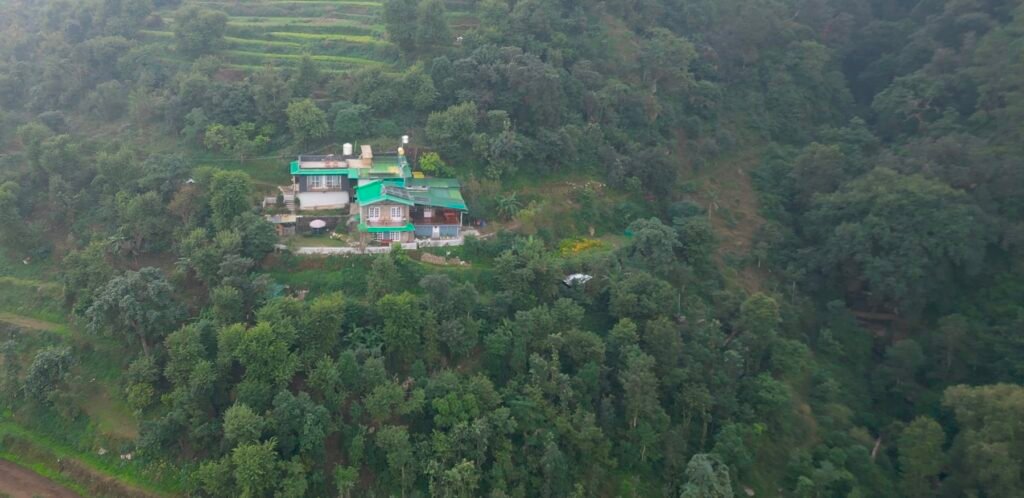
As per the official homestay policy of Uttarakhand government’s tourism department, the state where Fagunia Farmstay is located in and registered, a homestay is a dwelling where the owners live, share their kitchen with guests, and host guests in not more than 6 rooms. In other words, a homestay is exactly what the name suggests: a private home where the hosts live full-time and open their home to host guests within their personal space. This means you are not just renting a room—you are stepping into someone’s lived-in world.
At Fagunia Farmstay, this translates into sharing everyday life. Guests may eat meals cooked in the same kitchen as the hosts, experience seasonal rhythms of the land, and participate—directly or indirectly—in a slower, more intentional way of living. The boundaries between “host” and “guest” are softer here; conversations replace formal service, and connection replaces transaction.
How is a Homestay Different from Hotels, Resorts, or Villas?
Understanding this distinction is key to choosing the right kind of travel experience.
- Hotels and Resorts are designed for standardized comfort and service. They operate with large staff, extensive menus, range of amenities, and clear guest-service hierarchies. Privacy and predictability are their strengths.
- Villas and Holiday Homes typically offer private spaces, often without the owners present. They provide independence, making them ideal for groups seeking exclusivity and flexibility.
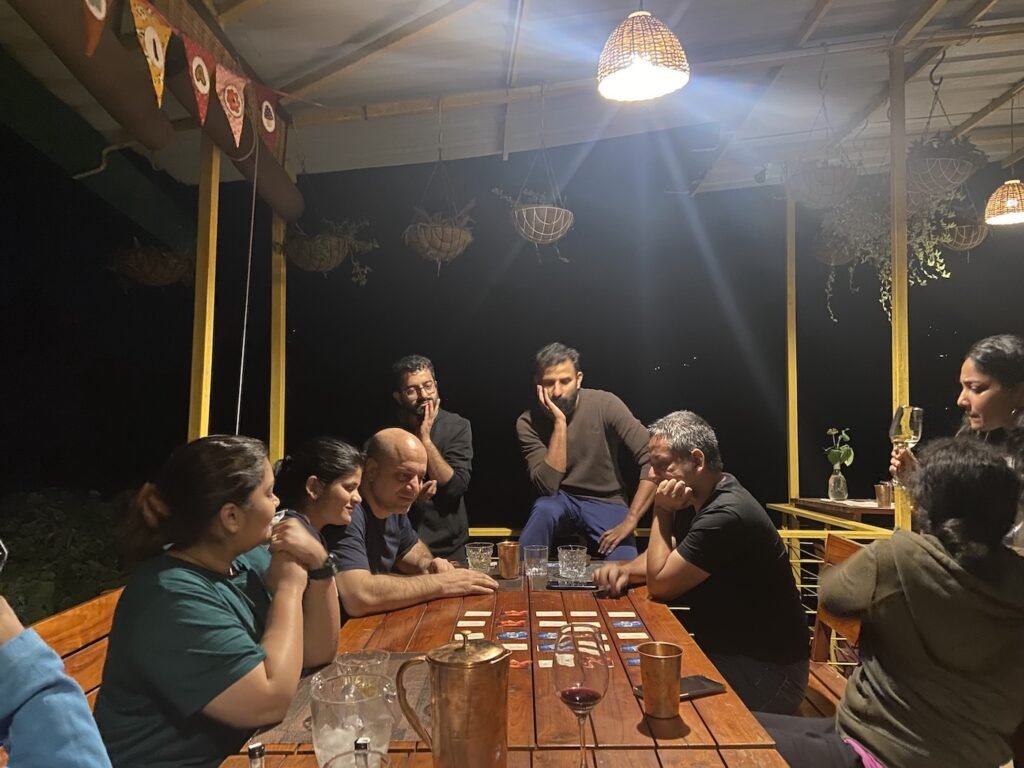
- Homestays, however, are personal. There is no separation between the “service provider” and the “space.” You are a guest in someone’s home, not a customer in a commercial setup.
This means the experience is less about amenities and more about authenticity. It may not always be polished or perfectly predictable—but it is real.
Why Choose a Homestay?
Guests who choose homestays are often looking for something deeper than just a place to sleep.
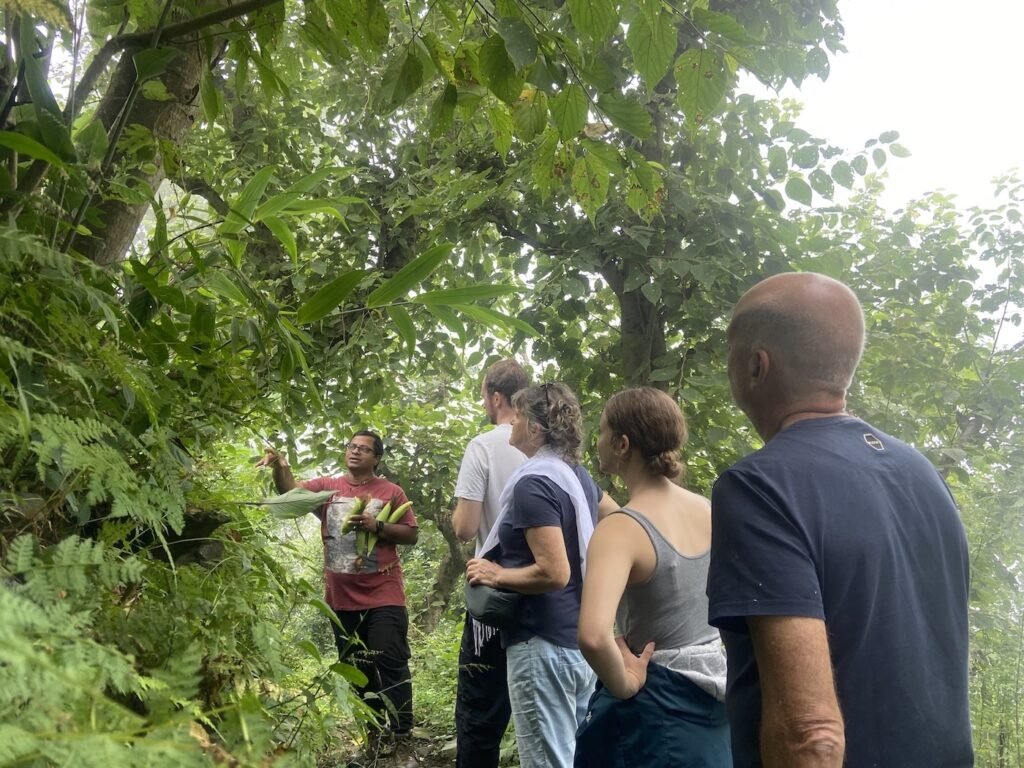
- Connection to Local Life: From food to stories, from farming practices to life choices, homestays offer a window into everyday life that hotels cannot replicate.
- Slower Travel: Homestays encourage you to pause, observe, and engage rather than rush through itineraries.
- Meaningful Interactions: Conversations in shared spaces often become the most memorable part of the journey.
- Sustainability and Simplicity: Many homestays, like Fagunia Farmstay, are rooted in mindful living—whether through local food, reduced waste, or a connection to nature.
What to Keep in Mind While Choosing a Homestay
Because every home is different, it’s important to approach homestays with awareness and intention.
- Understand the Setup: Is it owner-run? Do the hosts live on the property full-time? This defines the authenticity of the experience.
- Read Carefully: Look beyond photos—read descriptions, guidelines and reviews to understand the lifestyle being offered.
- Communicate Expectations: Ask questions before booking, especially about meals, routines, and facilities.
What to Expect—and What Not to Expect

A homestay experience is enriched when expectations are aligned.
What to Expect:
- Warm, personal hospitality
- Home-cooked meals (often based on local, seasonal ingredients)
- Shared spaces, experiences and conversations
- A slower pace of life
What Not to Expect:
- 24/7 room service or hotel-style amenities
- Extensive, multi-cuisine menus or large staff on call
- Complete privacy at all times
- A purely transactional interaction
Most importantly, remember: you are entering someone’s home. Respecting their space, guidelines, and way of life is essential. Simple gestures—like informing hosts of your plans, being mindful of the home and shared spaces, and participating with openness—go a long way in creating a harmonious experience. Many genuine homestays are up front and transparent about what kind of stay experience they offer and what they cannot so don’t forget to read up before finalizing your stay.
A Different Way to Travel
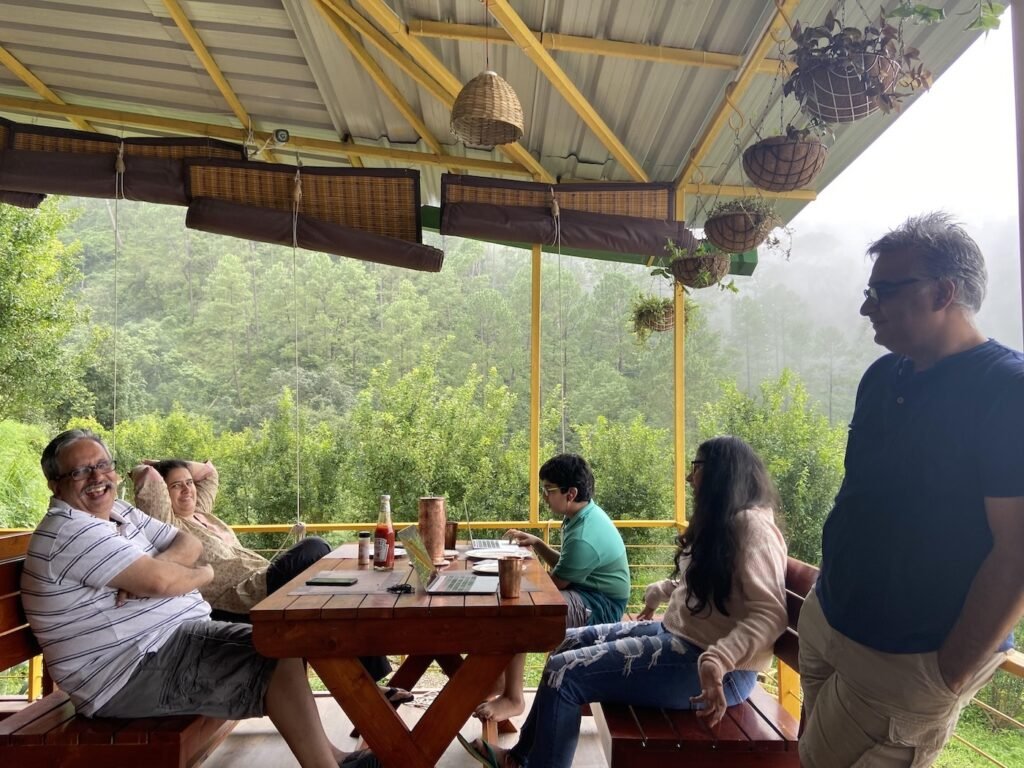
A homestay offers a refreshing alternative to conventional travel. It is not about luxury or convenience alone, but about connection, simplicity, and authenticity. Choosing a homestay like Fagunia Farmstay is, in many ways, choosing a different philosophy of travel. It is about stepping away from consumption-driven tourism and moving toward connection-driven experiences.
It may not suit everyone—and that’s perfectly okay. But for those who seek authenticity, simplicity, and a sense of belonging, a true homestay offers something rare: not just a place to stay, but a way to experience life differently. It is where travel becomes personal.
Experience a True Homestay
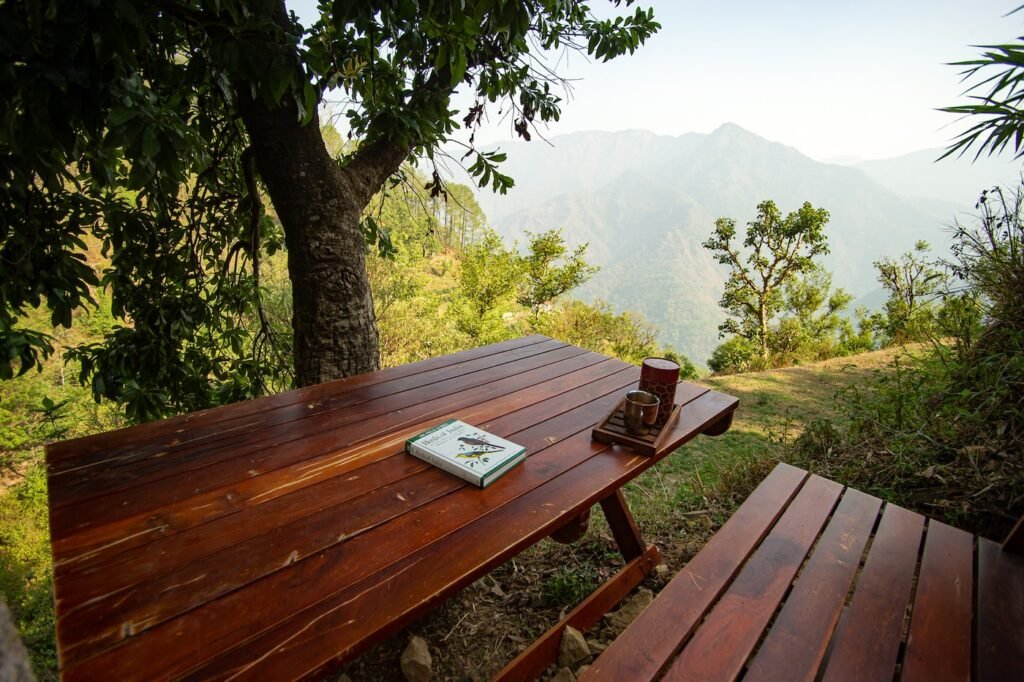
If you’re curious to experience a real homestay in India, Fagunia Farmstay welcomes you to slow down, reconnect, and be part of a simpler and sustainable way of life.

