
The Story Behind Faguniyakhet: The Meaning and Origin of Fagunia
A lot of people ask us, what does Fagunia mean? Where did the name come from? And why is this quiet Himalayan village called Faguniyakhet or Gwal Bajoon Faguniyakhet (as it is known officially)?
If you’ve ever searched for the meaning of Fagunia or Faguniya, you’ll probably discover that there are no definitive historical records that answer these questions. Instead, what survives are stories—passed down from one generation to the next. Like many villages in the Kumaon Himalayas, Faguniyakhet’s history lives more in memory than in written documents.
Perhaps that is exactly what makes its story so fascinating.
A Village Born During Difficult Times?
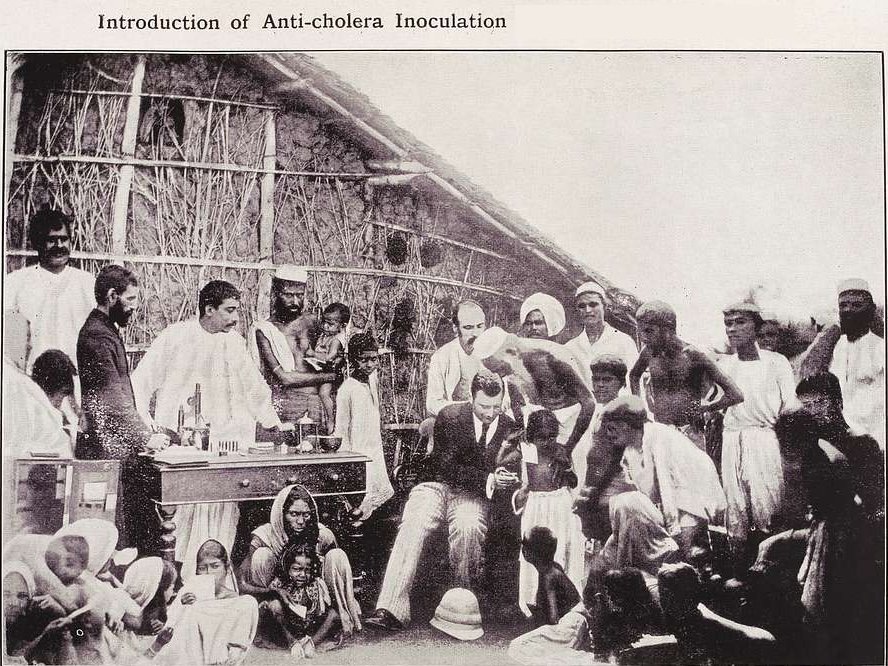
Anti cholera inoculation drive in India in 1894
One of the oldest oral traditions in the village takes us back nearly 150 years.
According to local elders, the origins of Faguniyakhet village can be traced to the late nineteenth century, when devastating cholera outbreaks repeatedly swept across the Indian plains. These epidemics claimed thousands of lives and transformed entire communities. Families are believed to have sought refuge wherever they could find cleaner air, safer water and a healthier environment.
The story goes that some of these families journeyed into the Kumaon hills, eventually settling on the fertile slopes where Faguniyakhet stands today.
Although there is no written document that directly confirms this migration, the story aligns remarkably well with the history of the period. Throughout the nineteenth century, cholera epidemics repeatedly affected northern India, while the Himalayan districts of Kumaon became known for their cooler climate, natural springs and healthier living conditions. British administrators themselves frequently described the Kumaon hills as places of exceptional natural beauty and comparatively healthy surroundings.
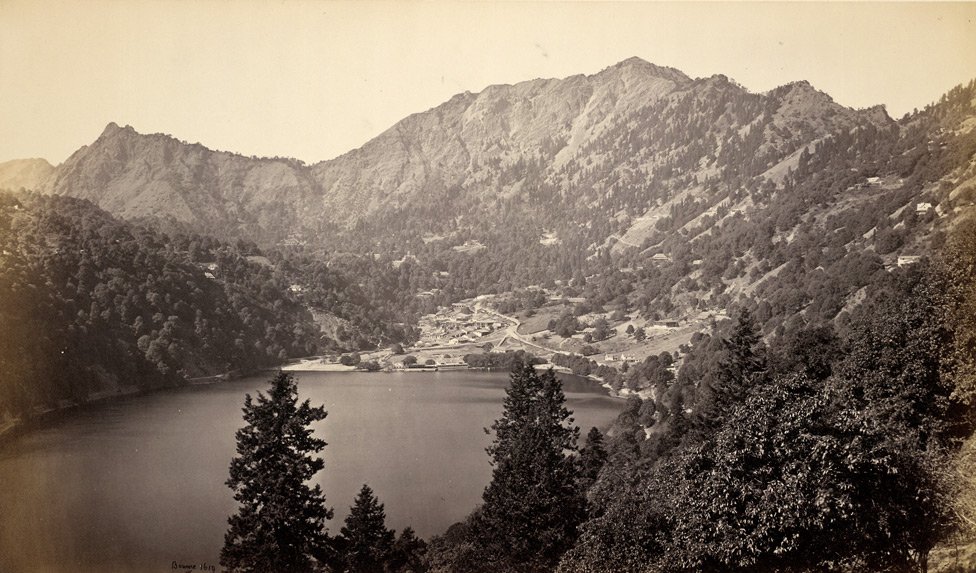
View of Nainital from Tallital in 1865
Whether every detail of the story is historically accurate may never be known. Yet for generations, villagers have believed that their ancestors arrived here seeking not wealth, but something far more precious—clean water, fresh mountain air and the chance to begin again.
The Mystery of the Phalgun Tree
Another equally beautiful explanation lies not in people, but in nature.
Local tradition says the village derives its name from a flowering tree known simply as the Phalgun tree. According to older residents, these trees once covered the surrounding hillsides and burst into bloom during the Hindu month of Phagun (roughly February-March), signalling the arrival of spring.
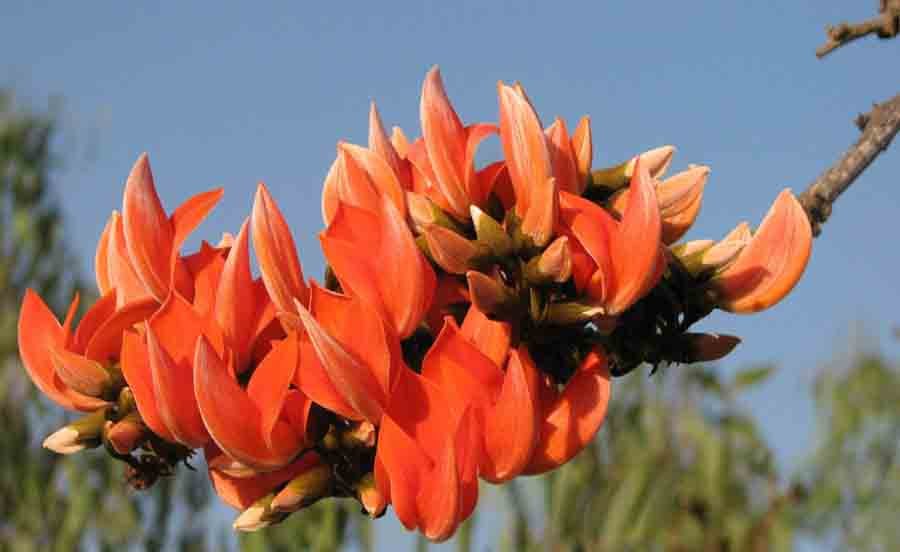
Palash Tree Flowers
Today, however, no one seems certain what species this tree actually was. We think it may be the Palash tree (for Flame of the Forest) which bursts into spectacular and striking orange-red flowers in spring. Or it could perhaps refer to the vibrant spring blossoms of the Gliricidia sepium tree, commonly known as the Mexican Lilac or Mother of Cocoa. We tried to find these trees with the help of villagers but so far we haven’t found them anywhere around the village.
They may have disappeared over time because of changing land use and climate, forest composition or simply the passing of generations. Like many local names for plants, the original identity of the tree may have faded from memory while the village name endured.
Even if the tree itself has vanished, its legacy survives in the name Faguniyakhet.
What Does “Faguniyakhet” Mean?
Breaking the name apart offers another interesting clue.
In Kumaoni and Hindi, khet simply means “field” or “cultivated land.”
That leaves Faguniya, which could have evolved from several possibilities:
- land associated with the flowering Phalgun tree;
- fields that became especially beautiful during the Phagun spring season;
- or perhaps a local place or natural feature whose original meaning has been forgotten over time.
Like many Himalayan place names, the exact origin may have gradually blurred as languages, dialects and generations changed.
Where History Ends and Stories Begin
One might expect a village’s history to be carefully recorded somewhere in government archives.
Yet surprisingly, even detailed nineteenth-century works such as Edwin T. Atkinson’s The Himalayan Gazetteer—one of the most comprehensive records of Kumaon under British administration—offer no clear explanation for the origin of Faguniyakhet’s name. Small mountain settlements often escaped detailed documentation, leaving oral traditions to preserve what official history did not.
In many ways, that makes these stories even more valuable.
They remind us that history is not written only in books. Sometimes it survives around evening fires, in conversations with grandparents, and in names that continue to be spoken long after their original meanings have faded.
The Spirit of Fagunia Lives On
Whether Faguniyakhet was founded by families escaping disease, named after a forgotten flowering tree, or inspired by the colours of spring itself, every version of the story shares something in common.
They all speak of renewal.
They speak of people finding hope and peace in the mountains.
They speak of nature shaping identity.
All reasons that led us too to put down roots here in this serene and beautiful village.
Back in 2016, when we were trying to come up with a name for our homestead, we coined the word Fagunia, derived in part from the Phagun season of Spring that signifies renewal and rebirth, and also from the root of the village name, in a subtle nod to the origin or settlement of the village. So that is what Fagunia means to us: a place of peace and rejuvenation.
Visitors to Fagunia Farmstay experience the same clean mountain air, water, peaceful forests and slower rhythm of life that may have first drawn settlers here generations ago. While no one can say with certainty which story is the “correct” one, perhaps that is not the point.
The real meaning of Fagunia lies not only in its name, but in the sense of belonging, gentle turning of the seasons, quietude and natural beauty that the village continues to offer to everyone who comes here.
Today, the word we coined has grown to become our legally registered brand trademark: Fagunia® and also lends its name to the small initiatives that have organically grown over the years like the homestay, farm, foundation and our farm fresh products! Little did we imagine that the name we created almost on a whim would evolve to mean so many different things.
Maybe, somewhere among these hills, the spirit of those long-forgotten spring blossoms still lingers.
Socialise with us on Instagram and Facebook to follow our updates or to start a conversation. You can also visit our website to contact us or learn more about Fagunia.